
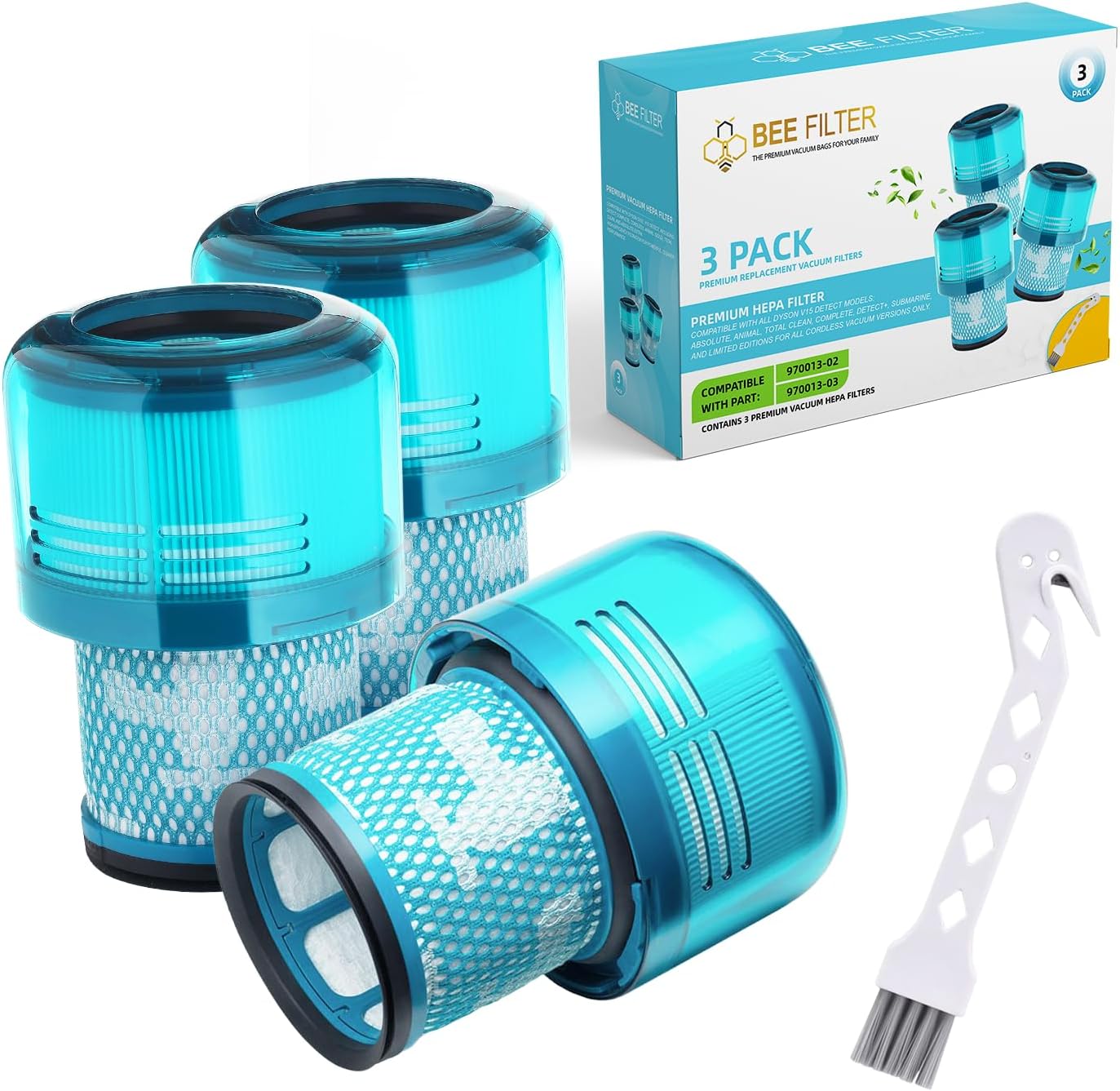
A spare vacuum filter is useful only if you can identify it and know whether it is ready to install. A cupboard containing several similar filters, loose boxes and a recently washed unit can create more uncertainty than convenience. Good storage is less about buying special organizers and more about keeping condition, model compatibility and care history easy to see.
This guide describes a simple household system for Dyson-compatible replacement filters. It applies to organizing your supplies, rather than setting a laboratory shelf life or guaranteeing filtration performance. Always follow the instructions supplied with the filter and the care guidance for your exact vacuum. Bee Filter products are independent compatible replacements, distinct from original Dyson parts.
Give each filter a clear status
Start with three categories: installed, drying and ready to use. If a filter is damaged or its history is uncertain, keep it outside those categories until you have decided what to do with it. The categories can be separate shelves, labeled trays or boxes. The important point is that a person who did not wash the filter can still tell whether it is available.
Do not rely on memory when several people clean the home. One person may see a filter on a counter and assume it has been forgotten, then put it back in the vacuum. A note identifying the model and wash date reduces that confusion. Use a card beside the filter rather than applying tape or writing on the filter media, sealing surfaces or locking components.
Drying space and storage space serve different purposes
Dyson’s official filter-care guidance calls for at least 24 hours of drying with airflow and requires the filter to be completely dry before installation. The clock is a minimum guide, not proof of dryness. Use the washing and drying method for your specific filter; different components should not be treated as interchangeable.
A closed box is a storage place for a ready filter, not a shortcut for drying a washed one. Give the drying unit an undisturbed location where air can circulate in the manner its instructions describe. Keep it out of a splash zone and somewhere children or pets will not move it. After it is completely dry, transfer it to the designated ready area.
Choose a ready-storage location away from damp cleaning cloths, leaking bottles and loose household chemicals. Protect the filter from being crushed by tools or heavy supplies. A clean container or the original packaging can help keep the item identifiable, provided it is dry and suitable for the filter. Do not seal a damp filter away simply to make the shelf look tidy.
Label the machine family before the pack size
The first thing on a storage label should be the complete machine family. A label that says two-pack tells you how many filters you bought but not which vacuum they fit. If your home has more than one Dyson, record the full model and the replacement reference used when ordering. Keep a photo of the original connection and the product page in a household maintenance folder.
For example, the Bee Filter catalog separates standard V15/V11 items from V12 Detect Slim, Outsize, Gen5 and V16 items. A V11 Outsize filter belongs with the Outsize group, not automatically with standard V11 parts. Similar colors do not make the designs interchangeable. A clear written label is much more dependable than deciding which purple cylinder looks familiar.
A small label template that stays useful
| Field | What to write | Why it helps |
|---|---|---|
| Machine | Complete model name | Separates similar-looking families |
| Product | Brand and ASIN or order reference | Helps locate the same listing later |
| Status | Ready, drying or needs inspection | Prevents an uncertain swap |
| Care note | Last wash date, if applicable | Supports your maintenance record |
| Contents | Number of ready filters | Avoids unnecessary duplicate orders |
Keep these records proportionate. You do not need a complicated spreadsheet to manage two filters. A card in the box and a photo of the purchase details are often enough. If you manage several properties or machines, a shared list can help, but use the same naming convention everywhere so that a spare is not moved to the wrong location.
Build a rotation that does not rush washing
With two compatible filters, a straightforward arrangement is one installed and one fully dry spare. When the installed filter needs the care specified in its instructions, remove it and move it to the drying workflow after washing. Install the ready spare only after checking its condition and fit. Return the washed filter to the ready area once it is completely dry.
With three or four units, give each one a simple identifier on its storage card. This helps you notice if the same spare is repeatedly overlooked. Rotation is an organizational choice, not a guarantee that every filter lasts for the same amount of time. Replace an item because of its condition and applicable guidance, rather than assuming that an equal number of swaps makes all filters equivalent.
A three-pack for listed V15 and V11 machines or a four-pack for the same listed family may suit someone who wants multiple ready spares. For other machines, inspect the separate V12 Detect Slim three-pack or Outsize two-pack. Pack quantity should be chosen only after compatibility is settled.
Inspect a spare before installing it
A ready label is useful, but it does not replace a visual check. Look for cracked plastic, a misshapen connection, obvious damage to the filter material, debris at the seating area and signs of moisture. If the part was stored under a heavy object or dropped, inspect it again even if it has never been used. Compare it with the old unit and the product instructions before fitting it.
The filter should engage using the specified method. If it will not seat properly, do not force it, trim a locking tab or use tape to hold it in place. Recheck the model and the ordered item. Keep the packaging and order details until you are confident the part is correct, so that any support conversation can identify exactly what arrived.
Organizing filters for two homes or multiple machines
If you keep a vacuum upstairs and another downstairs, avoid a shared unmarked bin of filters. Assign one container to each machine, even when the parts currently look similar. Place the compatibility note inside the lid so that it travels with the spare. If a vacuum is sold or replaced, review the stored filters rather than carrying the old label into the new setup.
For a holiday home, include a short instruction card for anyone who cleans it. State where dry spares are stored and where washed filters should be left. Ask people to note a problem instead of quietly returning a questionable filter to the ready box. This gives the next person a clear starting point and avoids repeated troubleshooting with the same damaged item.
Avoid buying more filters than you can manage
A larger pack can be convenient, but it is not automatically the better purchase. Think about the number of compatible machines, the room available for protected storage and how often you actually need a spare. Compare the current cost per filter only between products that meet the same fit requirement. Do not count an incompatible unit as useful stock simply because it was inexpensive.
There is no universal storage expiration date established by this guide. If a supplier gives a shelf-life instruction, follow it. Otherwise, retain purchase information, store the parts carefully and inspect them before use. An old unopened box still needs a model and condition check, especially if you have changed vacuums since buying it.
Keep the system easy enough to continue
The best arrangement is one you can explain in a sentence: washed filters dry here; completely dry, compatible spares are stored there. Revisit the setup when you buy a new machine or a different filter design. For the care steps themselves, read how to wash a Dyson filter; for the purchasing distinction, see genuine versus compatible filters.
A little organization removes the pressure to make a hurried decision on cleaning day. You know what fits, where it is and whether it is ready. That is the practical value of keeping spare filters: a reliable routine built around the equipment you own, with clear information available the next time a part needs attention.
Sources and further reading
Model-specific manufacturer instructions take priority. Product options refer to the Bee Filter catalog reviewed on October 16, 2026.