
A home with a dog or cat can have several different vacuuming jobs in the same afternoon: loose hair on a sofa, tracked-in grit near a door, lint on a rug and ordinary household dust under furniture. Treating all of those jobs as a filter problem makes maintenance confusing. A useful routine separates what the cleaner head collects, what the bin holds and what you can inspect at the filter.
The goal is a machine that is ready for your next cleaning session, with parts that fit and a filter that has been cared for correctly. This guide does not promise allergy relief, odor removal or a measured change in indoor air quality. It focuses on practical upkeep and choosing a compatible spare for the Dyson model already in your home.
Premium filter materials still need an organized care routine
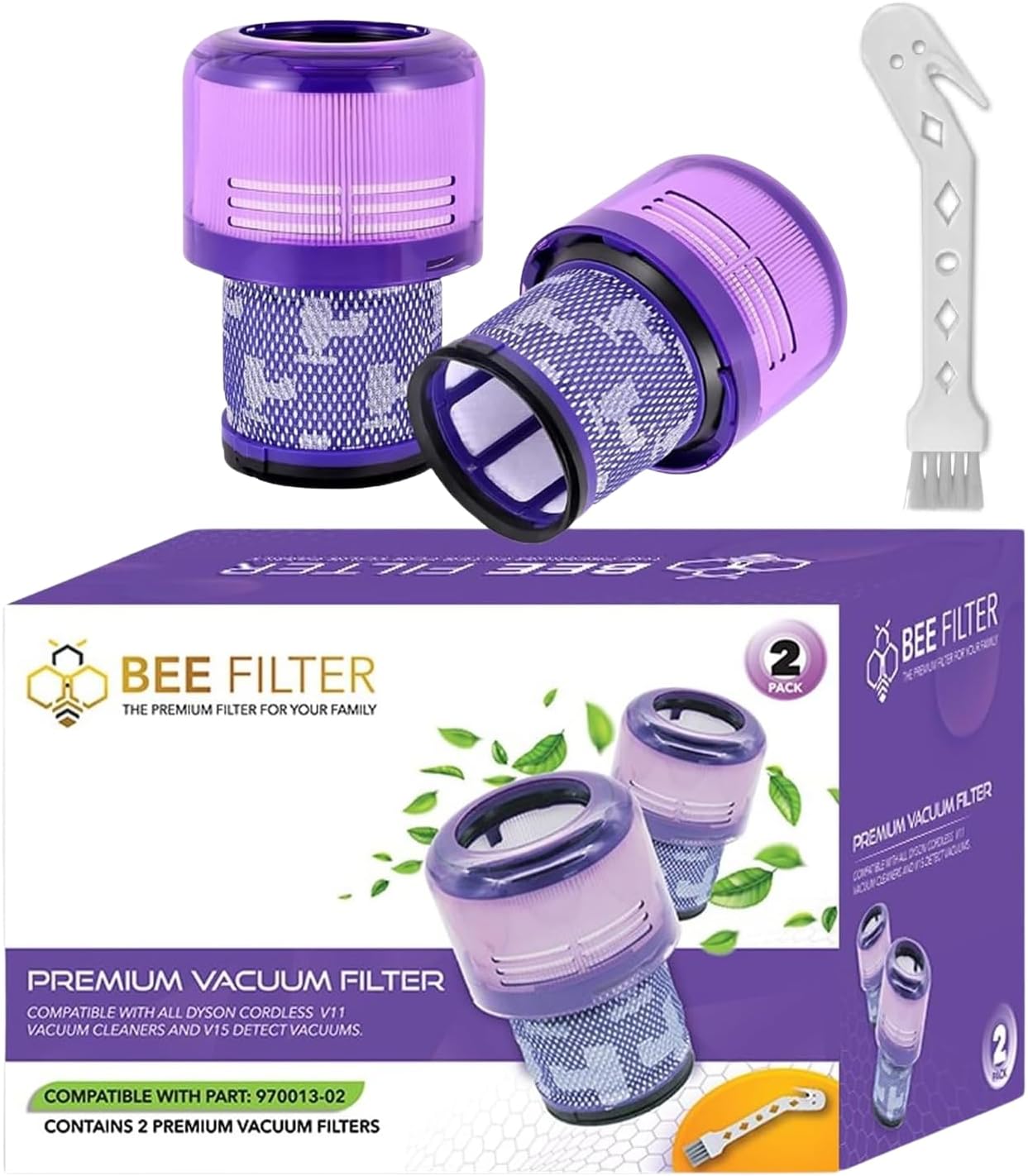
Bee Filter specifies HEPA H13 media, ABS housing and washable, reusable construction for its replacement filters. Its up to 99.99% airborne-dust filtration figure is supplied by the brand owner for the media, with no particle size or test method supplied here; it is not a whole-vacuum efficiency or pet-allergy claim. In a home with pets, the practical benefit of a washable filter and a matching dry spare is easier scheduling. Continue to check the bin, brush and air path as your machine instructions require. A premium material specification does not turn the filter into a substitute for those separate maintenance tasks.
Start by separating hair pickup from filter maintenance
Long hair wrapped around a roller is a different issue from dust collected in a filter. A new filter will not remove a tangle around the brush bar. Similarly, changing an upholstery attachment does not address a filter that is overdue for inspection. Before ordering anything, put the vacuum down, turn it off and look at the part associated with the symptom you actually noticed.
Write a short description rather than simply saying that suction is poor. For example: hair remains on the couch, the floor head stops rotating, the machine displays a filter message, or debris is caught in the wand. These observations help you choose the next check and explain the problem if you need support. Stop using a tool that is damaged or making a new abnormal noise until it has been assessed.
A four-zone inspection for a pet household
- Cleaning surface: inspect the sofa, rug or floor for loose objects before vacuuming. Put away pet toys, cords and fabric ties that can interfere with cleaning.
- Tool and roller: with power off, check accessible areas for wrapped hair or trapped material. Follow that tool’s removal instructions; do not reach into an operating brush.
- Bin and air path: inspect the bin fill level and the user-accessible passages described in your machine manual. An obstruction deserves its own attention.
- Filter: check its condition, fit and any message on the machine. Use the maintenance directions for your exact model and filter.
This sequence creates useful evidence. If you find hair caught at the roller, deal with that first and reassess. If you change the roller, empty the bin and swap the filter at the same time, it becomes harder to tell which action mattered. Keep the process simple enough to repeat when someone else in the household uses the vacuum.
Use a recurring inspection, not an invented replacement deadline
A fixed rule such as replacing every filter after a certain number of weeks ignores how the vacuum is used. Two households with the same machine can clean different areas, surfaces and amounts of debris. Instead, add a quick inspection to an existing task, such as putting away grooming supplies or cleaning the pet’s sleeping area. Follow the manufacturer’s maintenance interval and respond to the machine’s guidance.
A small note can include the inspection date, whether the filter was washed, any visible damage and which spare was installed. This is a household planning tool, not a scientific performance log. After a few cycles, you will have a more useful picture of your own routine than a generic schedule can provide. If a warning persists, consult the troubleshooting instructions instead of repeatedly buying filters.
Build drying time into the plan
Dyson’s filter-care guidance says a washed filter needs at least 24 hours in a place with airflow and must be completely dry before it goes back into the machine. Its guidance also warns against drying with a microwave, tumble dryer or naked flame. Check your model-specific directions for the washing method, and follow the care instructions supplied with a compatible replacement.
For a busy pet household, the practical challenge is often timing. Washing the only filter immediately before a planned cleanup creates pressure to reinstall it too soon. Plan filter care after the final scheduled cleaning of the day, or keep a correct, fully dry spare available. A second filter gives you another option; it does not make the freshly washed one dry faster.
Choose a drying location that household members can recognize. Keep it separate from the storage area for ready-to-use filters, away from places where pets can knock it onto the floor. A simple card marked with the wash date can prevent a helpful family member from returning a damp filter to its box. The final decision to reinstall should be based on dryness, not the card alone.
Choose a spare by model, not by the word Animal
Names such as Animal, Absolute and Detect appear in several Dyson ranges. They are useful descriptions, but they are not enough to identify a replacement filter. Read the complete model name and compare the relevant part reference and attachment shape. In particular, a standard V11 filter listing should not automatically be treated as suitable for V11 Outsize.
Bee Filter offers independent compatible replacements, not genuine Dyson-manufactured filters. Its two-pack for listed V15 and V11 models, V12 Detect Slim two-pack and Gen5 two-pack serve different model groups. Compare the product’s full compatibility notes before choosing. Color and similar-looking online photographs are not sufficient evidence of fit.
Match the attachment to the place you are cleaning
A sofa cushion and a wide hard floor create different handling needs. A compact powered upholstery tool may be easier to position on a seat or stair, while a floor head covers a larger area. Check the material’s care instructions before using a powered brush, especially around loose fabric, fringe, delicate coverings and decorative details. Try an unobtrusive area if the surface manufacturer allows that tool.
The Bee Filter mini motorized brush head is listed for selected full-size V7, V8, V10, V11 and V15 machines. That catalog statement does not extend to every Slim model or other connector. Verify the exact machine and accessory connection before purchase. Our mini tool versus floor head guide explains the different roles in more detail.
What to do when the routine does not solve the problem
If the vacuum still behaves differently after the checks authorized by its manual, stop making assumptions about the filter. Record the model, the message on the display, the attached tool and when the symptom occurs. A problem that appears only with one attachment gives support different information from one that appears whenever the machine runs.
Do not add scents, powders or cleaning chemicals to the filter in an attempt to make the vacuum smell fresher. Use only the care method specified for the component. Inspect the items you have been cleaning and the areas of the vacuum the manual permits you to access. If there is damage, heat, moisture inside the machine or a persistent abnormal smell, seek guidance before continuing.
A realistic routine is easier to maintain
Keep daily cleanup, occasional tool inspection and filter washing as related but separate tasks. Store the model reference beside your spare so that a future purchase is straightforward. Before washing, review our filter washing guide together with your machine’s instructions. The most useful spare is the one that fits your machine, has clear care directions and is fully dry when you need it.
For help choosing a Bee Filter item, send the complete model name, a photo of the old filter connection and the product ASIN you are considering. Those details are more helpful than a general description such as a purple Dyson filter. A short compatibility check can prevent an unnecessary return and make your next maintenance day easier to organize.
Sources and further reading
Model-specific manufacturer instructions take priority. Product options refer to the Bee Filter catalog reviewed on October 16, 2026.